
From “Can I Buy This?” to “Is It Worth It?”
Between the ages of 8 and 10, children become increasingly aware of money.
They notice prices. They recognize brands. They ask for things their friends have. They receive birthday money. They see parents using UPI and cards. And they begin making their own small spending choices.
This makes it a powerful age to build the right financial mindset
ArthaShastra Jr.’s Financial Literacy Worksheets for Ages 8–10 make money learning simple, practical, funny, and relatable—without making it feel like another school subject.
What Will Your Child Explore?
💰 Value of Money
Children understand that money represents work, effort, time, and value. They begin looking beyond the price tag and appreciating what goes into earning money.
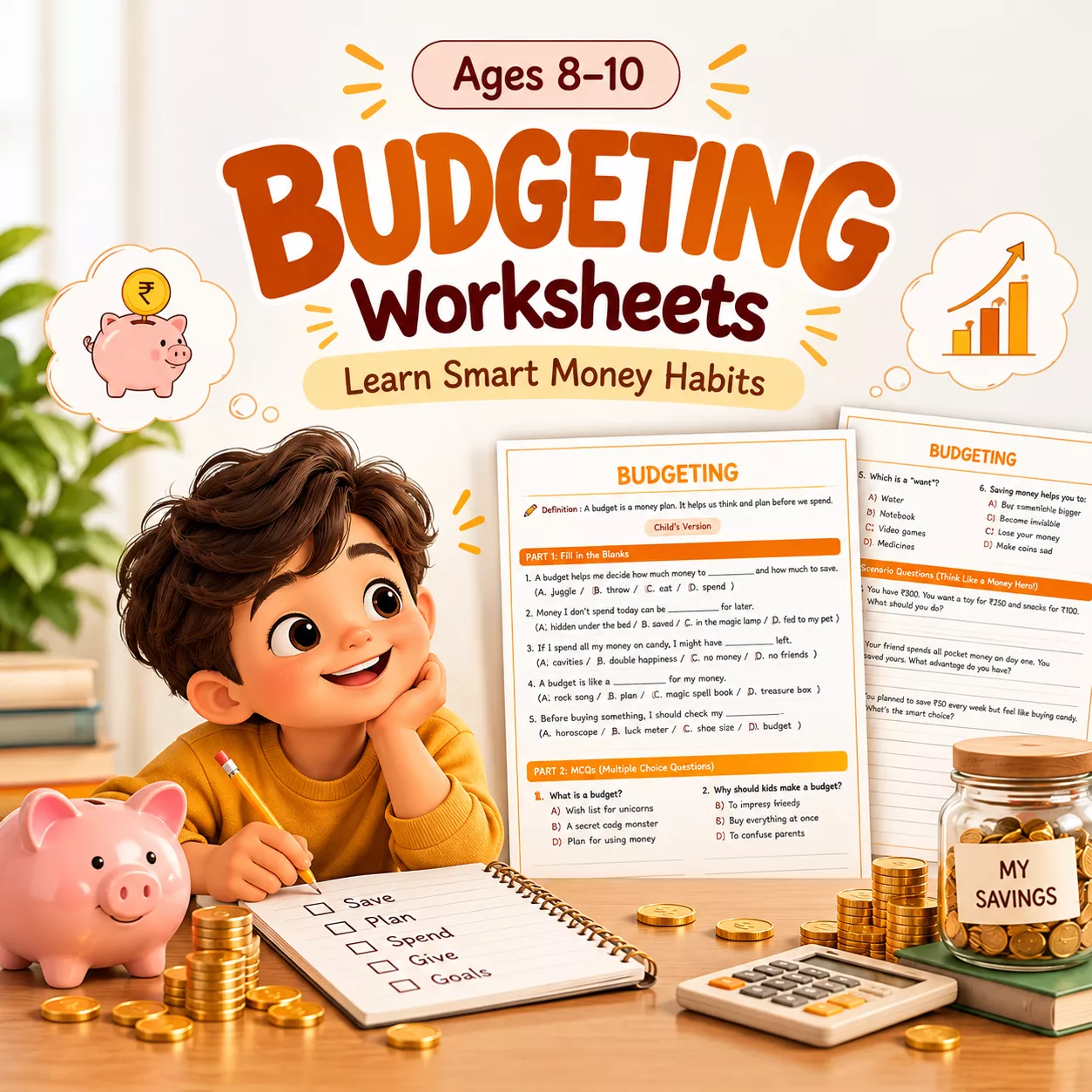
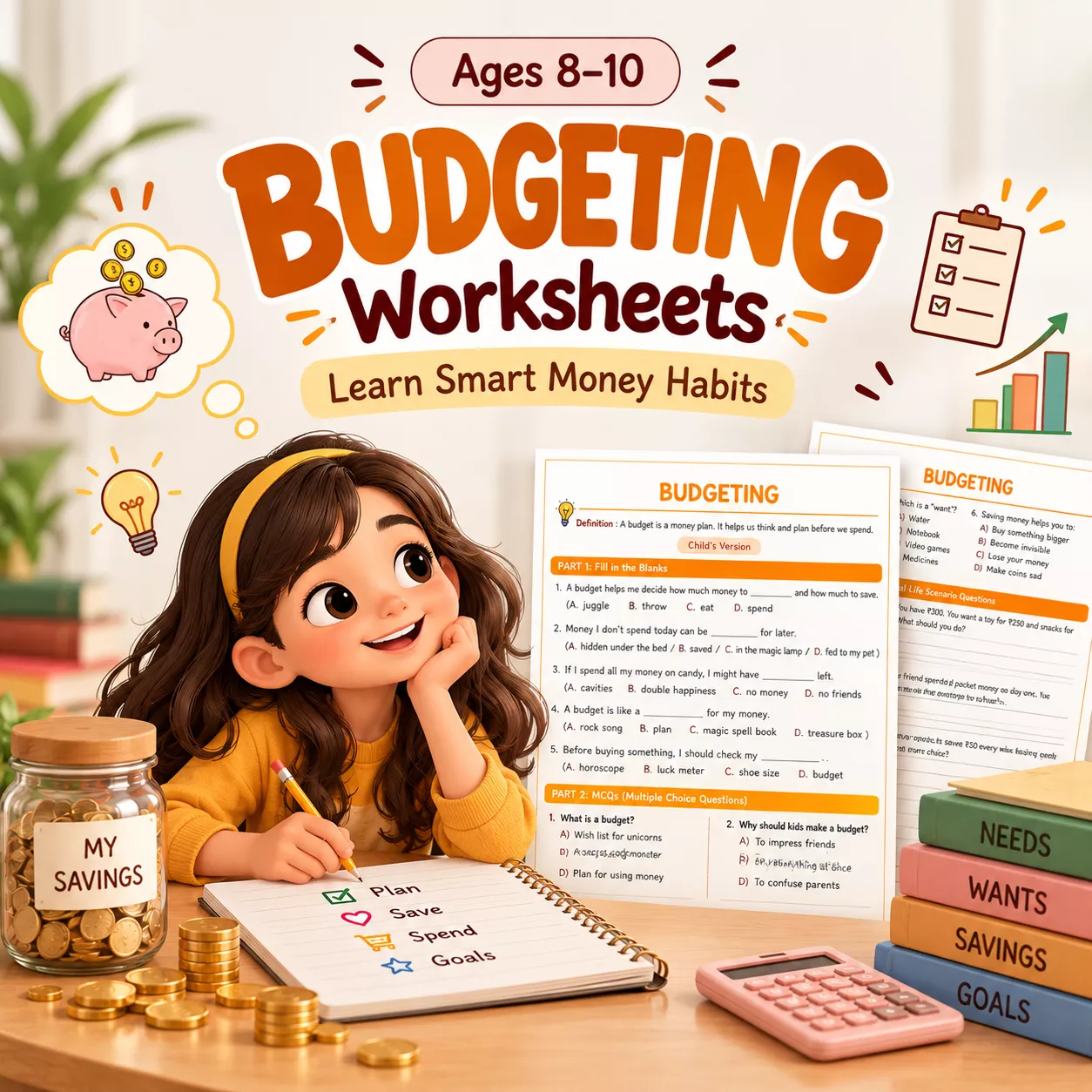
📋 Budgeting
If you have ₹500 but your wish list costs ₹800, what would you do? Children learn that money is limited and that good choices require planning and prioritising.
💼 Earning
Children discover that money doesn’t simply appear—it is earned when people use their time, effort, knowledge, and skills to create value.
🛍️ Smart Spending
Do I need it? Do I really want it? Is it worth the price? Should I compare before buying? Children learn to pause and think before spending.
🛡️ Safe & Unsafe Situations
Through relatable scenarios, children practice recognising safe and unsafe situations, making responsible choices, and knowing when to approach a trusted adult.
📱 Digital Safety
From passwords and gaming purchases to suspicious messages and sharing personal information, children learn simple rules for making safer choices in the digital world.
*Worksheets That Don’t Feel Like Worksheets*
* No lengthy explanations.
* No calculations.
* No marks.
* And definitely no boring finance lectures.
Instead, children learn through: :
* Easy and engaging MCQs
* Funny everyday situations
* “ What would you do? ” questions
* Real-life money dilemmas
* Choice-based activities
* Reflection questions
* Simple problem-solving situations
* Age-appropriate financial challenges
* A child might be asked:
“Your friend buys an expensive water bottle because everyone in class has one. Yours works perfectly well. What would you do—and why?”
The purpose isn’t simply to find the correct answer.
It is to encourage children to pause, think, reason, and explain their choices.
Because financial intelligence isn’t only knowing about money.
It is knowing how to make a good decision when money is involved.
Building a Financial Mindset—Not Just Financial Knowledge
The worksheets encourage children to gradually move:
* From “I want it” → “Do I really need it?”
* From spending immediately → comparing choices
* From following friends → making independent choices
* From looking at price → understanding value
* From expecting money → understanding earning
*From impulse → thoughtful decision-making
These small mindset shifts can become the foundation of healthier financial habits later in life.
🎁 Launch Bonus: Birthday Budget Worksheet
Included at No Extra Cost
A birthday is something every child understands—and that makes it a perfect opportunity to experience budgeting in real life.
The Birthday Budget Worksheet gives children a fixed celebration budget and encourages them to make choices around different expenses.
Should they spend more on the cake or decorations?
Can they have everything on their wish list?
Where could they save?
What matters most to them?
Through a celebration they already love, children practise budgeting, prioritisation, trade-offs, planning, and smart spending.
And suddenly, budgeting isn’t a chapter in a textbook.
It’s their birthday. Their budget. Their decisions.
What Your Child Begins to Develop
With every activity, children begin strengthening much more than financial knowledge.
They develop money awareness, responsible spending, saving habits, decision-making, planning, patience, ownership, digital awareness, confidence, and independent thinking .
Most importantly, they begin understanding that managing money wisely isn’t about never spending.
It’s about knowing when to spend, when to save, when to wait—and why.
ArthaShastra Jr.
Simple enough to understand. Fun enough to enjoy. Practical enough to use in real life.
Reviews
There are no reviews yet.