
Important Money Lessons With Ease & Lots of Fun!
What if learning about money didn’t feel like learning at all?
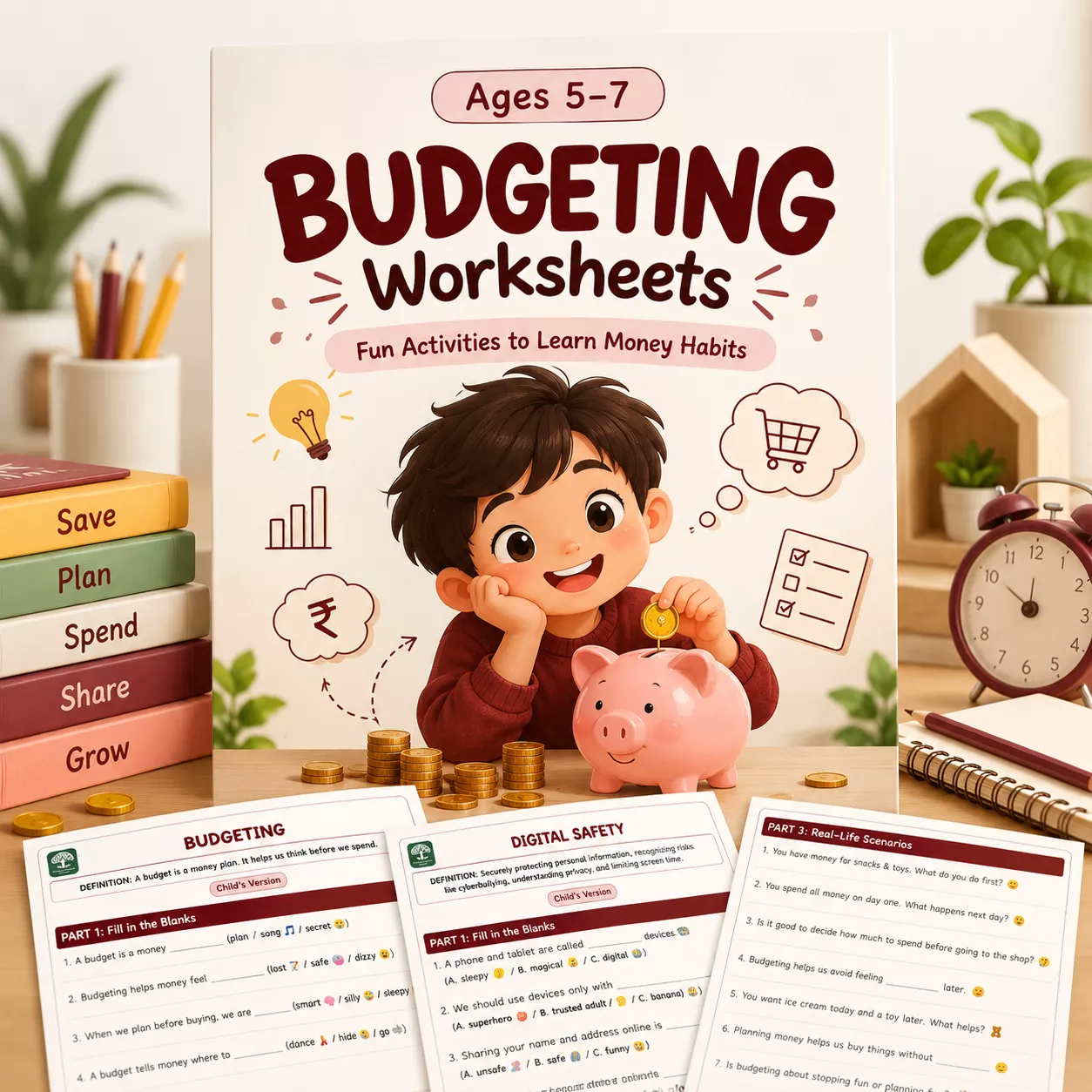
ArthaShastra Jr.’s Age 5–7 Financial Literacy Worksheets are designed to introduce young children to important money and life concepts in a way that feels simple, funny, colourful, relatable, and enjoyable.
At this age, children don’t need complicated financial terms or difficult calculations. They need stories, situations, questions, and examples that connect with the world they already know.
What Will Your Child Explore?
💰 Value of Money
What is money? Why do people work for it? Why should we take care of the things we have?
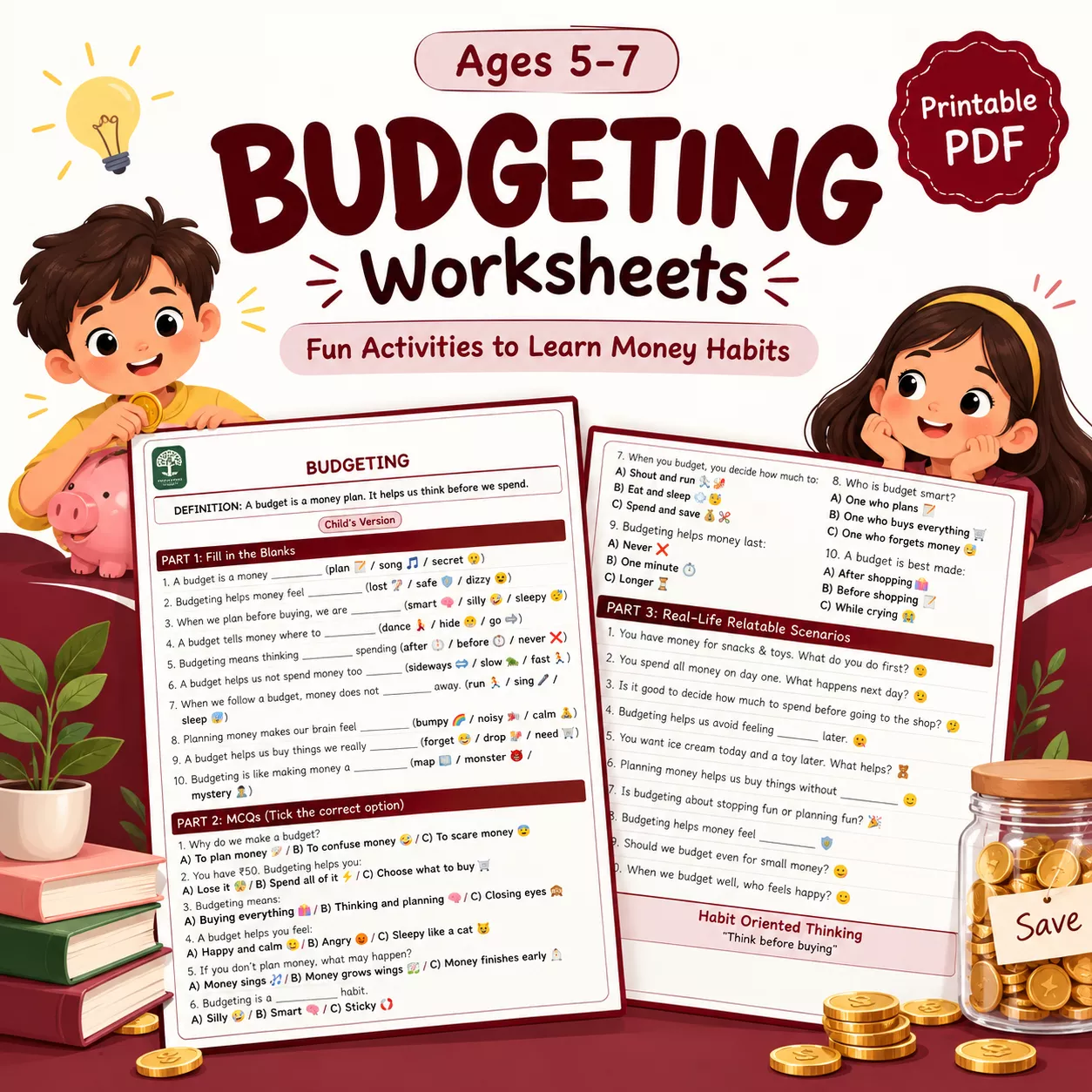
📋 Budgeting
Children get introduced to the idea that we cannot buy everything we want and that money needs to be planned.
🏃 Earning
Through simple, relatable situations, children understand that money comes from work, effort, and creating value.
🛍️ Smart Spending
Should I buy it just because I like it? Is it something I need? Children begin learning to pause, think, compare, and choose.
🛡️ Safe & Unsafe Situations
Children learn to recognise situations that are safe, unsafe, comfortable, or uncomfortable and understand when to seek help from a trusted adult.
📱 Digital Safety
Simple scenarios introduce children to safe behaviour while using phones, tablets, games, apps, and the internet.
*Why Will Children Enjoy Them?*
These aren’t the kind of worksheets where children simply sit down and fill in page after page.
They include:
* Easy-to-understand questions
* Funny and playful situations
* Simple MCQs
* Real-life relatable scenarios
* Everyday examples children recognise
* Thought-provoking choices
* Age-appropriate activities
* No calculations
* No pressure, no boring lectures, no marks
A question might ask:
“You have ₹100. You really want a toy, but you also want to save for something special. What would you do?”
There isn’t always one perfect answer.
The goal is to help children think, discuss, and understand why they make a choice.
Every worksheet is designed to start a conversation between child and parent.
Instead of simply asking, “Did you get the answer right?”, parents can ask:
“Why did you choose that?”
“What would you do in real life?”
“Is there another choice you could make?”
This helps parents discover how their child is already thinking about money, safety, choices, and responsibility.
What Your Child Begins to Build
Through these simple activities, children begin developing:
* Money awareness — understanding what money is and where it comes from.
* Smart decision-making — thinking before choosing.
* Responsibility — learning to value money and belongings.
* Early budgeting habits — understanding that money has to be planned.
* Safety awareness — recognising safe and unsafe situations.
* Digital awareness — learning simple habits for staying safe online.
* Confidence — expressing their own thoughts and explaining their choices.
Because financial literacy doesn’t have to start with numbers. It can start with a simple question: “What would you do?”
Reviews
There are no reviews yet.